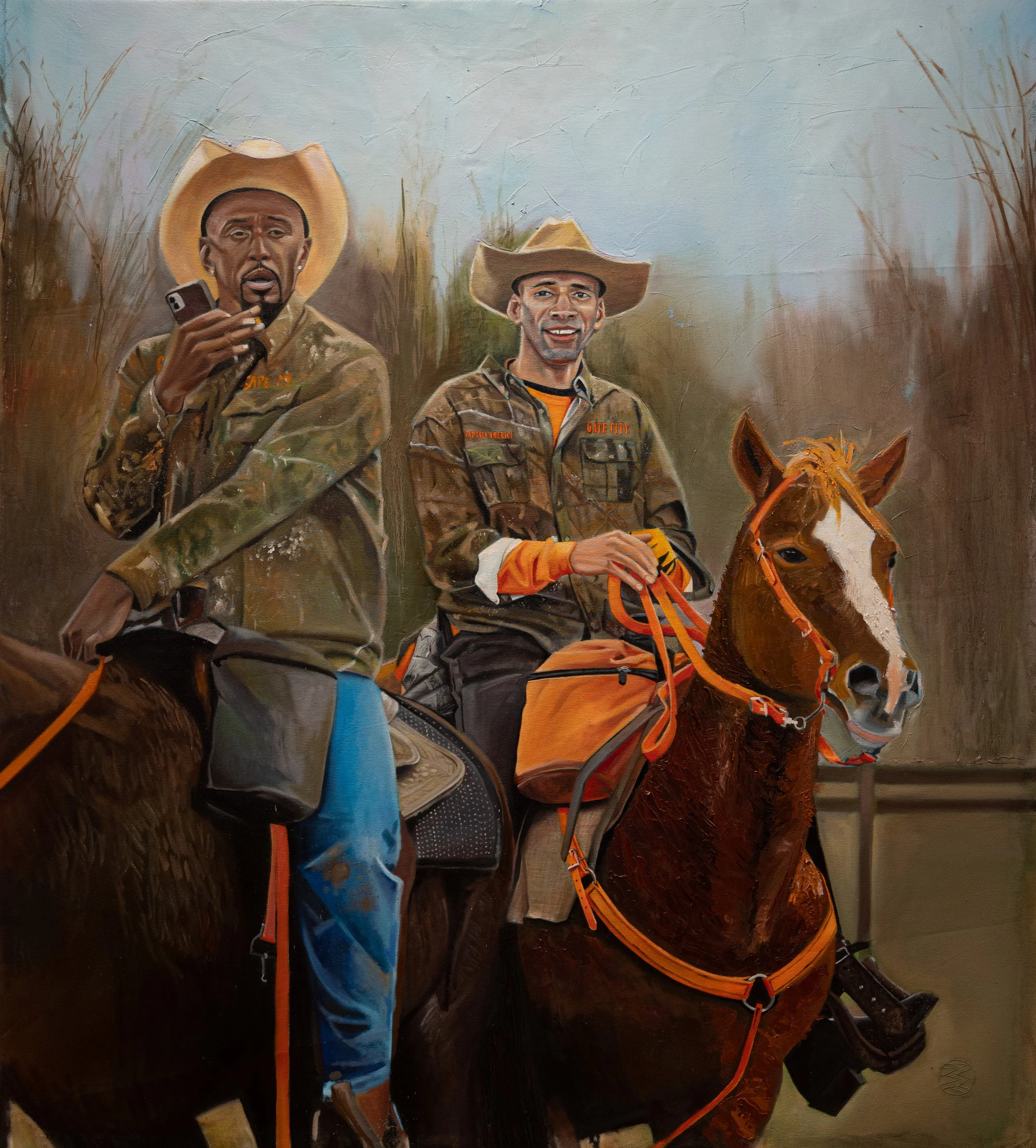
My practice centers on holding space for stories that are often overlooked. Through photography and painting, I engage themes of legacy, community, and leisure, approaching each subject with care, attentiveness, and respect. I am committed to being fully present with the people I photograph, allowing time, trust, and proximity to shape how their stories are told.
When I began researching this body of work, my photography centered on Black equestrians navigating English riding spaces shaped by discipline, formality, and tradition. Initially, I was simply excited to witness and document Black presence on horseback, and that sense of discovery carried the work forward. Over time, I became increasingly aware that these environments carried specific histories and expectations that emphasized conformity and restraint, which felt misaligned with my interest in autonomy, cultural expression, and broader narratives of Black experience. Once I was introduced to Western riding, I found myself drawn toward a style in which the relationship between rider and horse feels more intuitive and open, emphasizing freedom of movement, utility, and endurance. This shift was not a rejection of one style in favor of another, but a recognition of where I felt a deeper sense of belonging, rooted in the understanding that Black riders have always been central to the history of the American cowboy. Western riding offered a visual and cultural language that aligned more closely with my process, allowing my documentation to move nearer to the rhythms, values, and expressions I seek to understand and preserve.
This work continues through sustained engagement with trail rides and local stables, where Black horsemen and women gather, work, and pass down knowledge through daily practice and shared experience. I spend extended time within these spaces, observing how skills are taught, how horses are cared for, and how community forms through shared labor and responsibility. I do not direct scenes or impose structure. Instead, I allow the pace of the ride, the physical demands of the stable, and the quiet moments in between to guide the images I make. The camera becomes a tool for close attention, recording gesture, posture, and relationship as they naturally unfold.
From these photographs, I develop paintings that extend the life of the image. Through layered texture, realism, and a saturated palette, the portraits take on a heightened physical presence. The compositions are direct and assured, challenging narrow perceptions of Black leisure while reflecting the vitality and depth of Black cultural expression. Though bold in form, each work carries an underlying sense of ease, offering space for joy, rest, and continuity within Black equestrian life.